COCOON / 0-1 PRODUCT INNOVATION
Reimagining postpartum support through intelligent coordination, so families can spend less time managing care and more time receiving it.
Care, beautifully coordinated.
ROLE
Founder and Product Designer
SCOPE
0-1 Product Strategy, Design, and Development
THE CHALLENGE
The invisible work of getting care.
The arrival of a baby brings an entirely new set of responsibilities. Beyond physical recovery and caring for a newborn, parents are suddenly navigating appointments, paperwork, schedules, and offers of help from family and friends.
In my research, parents reported not always knowing the help they need or how to manage it.
I saw an opportunity to rethink how postpartum support is coordinated—not by asking families to manage another tool, but by creating an experience that takes on the work for them.
THE APPROACH
Support shouldn't require so much work.
The problem wasn't necessarily a lack of support. It was the effort required to bring that support together.
Appointments lived in calendars, important information was scattered across emails and patient portals, and offers of help arrived through texts and conversations. Each required someone to remember, organize, and follow through.
I began exploring a different approach: what if technology could coordinate these moving pieces automatically, rather than giving parents another system to manage?
That insight became the foundation for Cocoon—a care coordination experience designed to anticipate needs, connect people and information, and make receiving support feel effortless.
THE RESULT
Care, designed around real life.
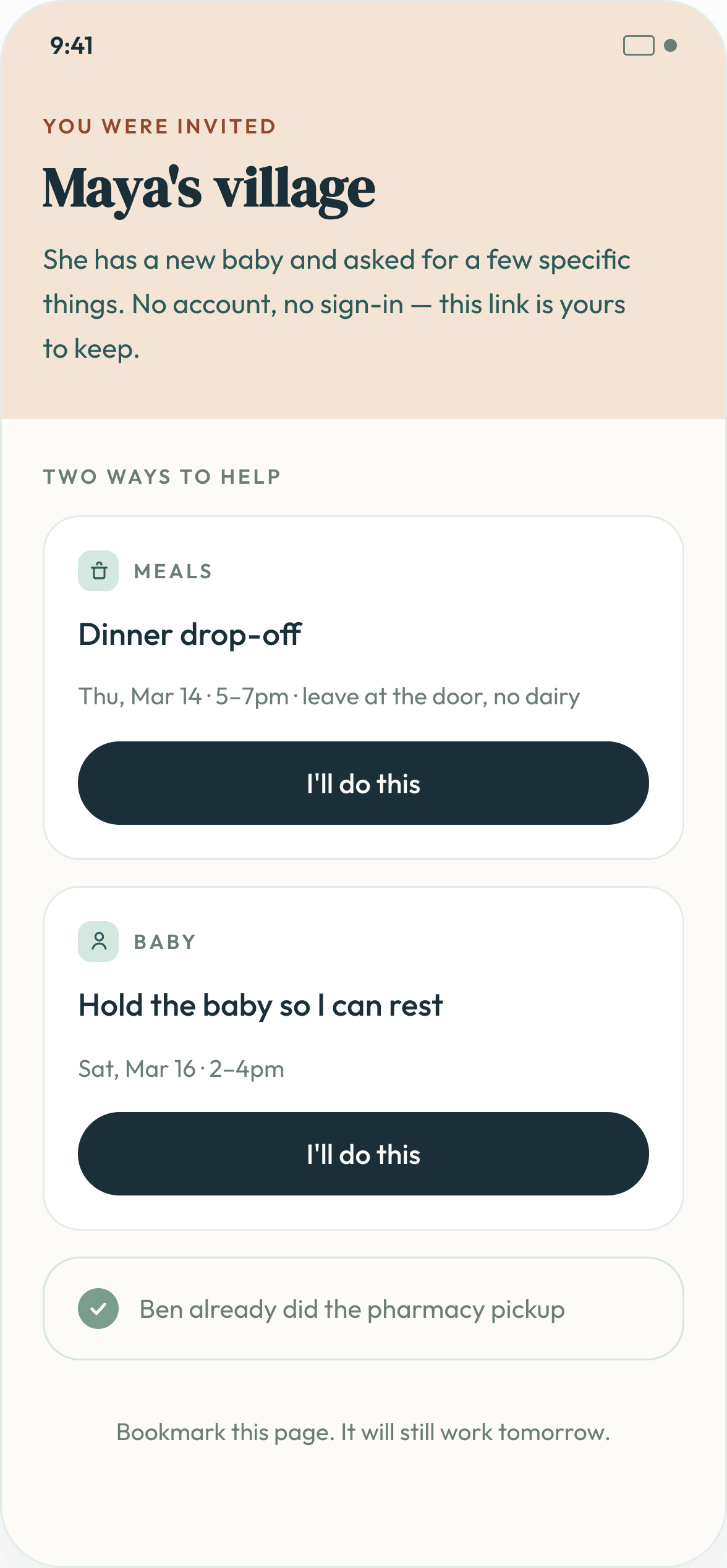
I founded Cocoon to explore a simple idea: what if coordinating care could happen in the background, without adding to the mental load of the people receiving it?
I led the product from concept through initial development, defining the strategy, prioritizing the core experience, and designing and building the product.
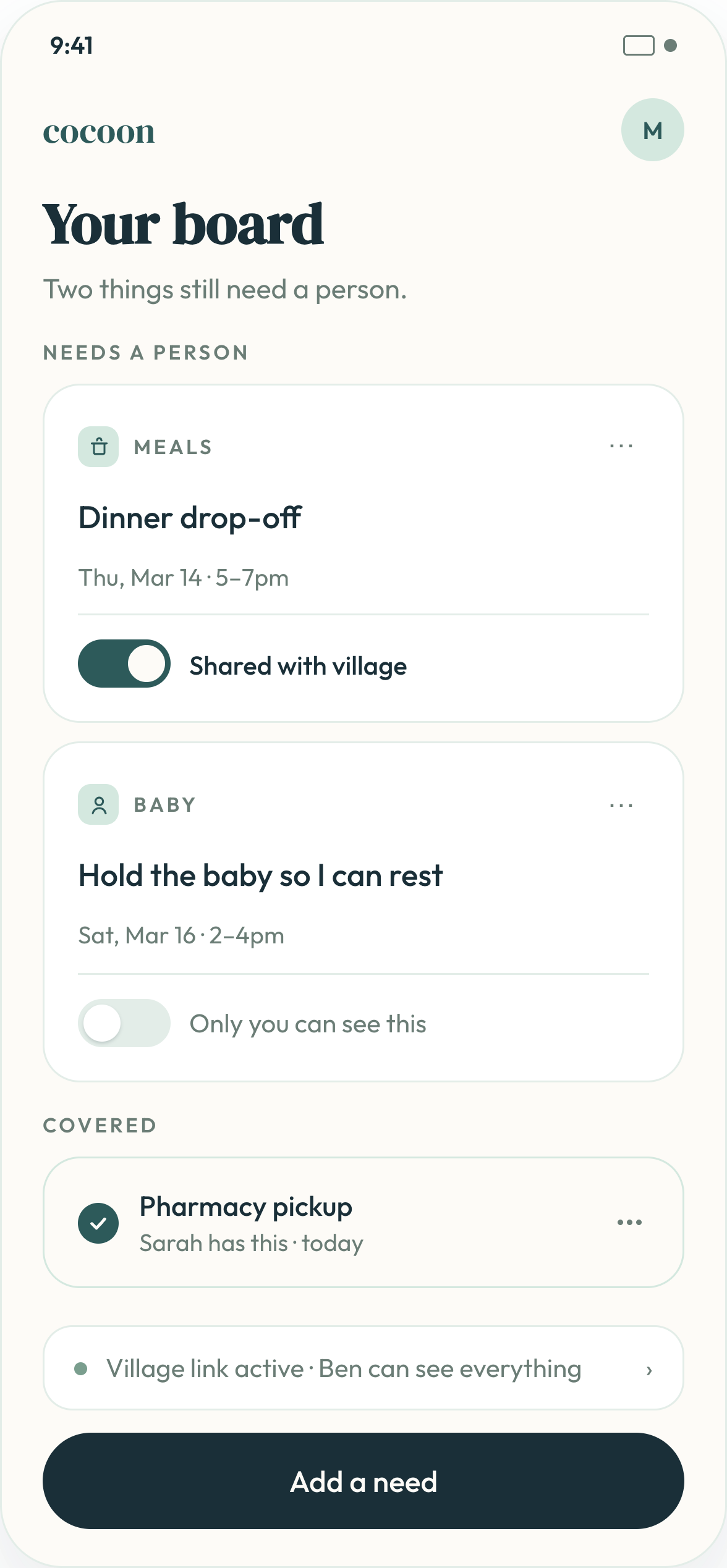
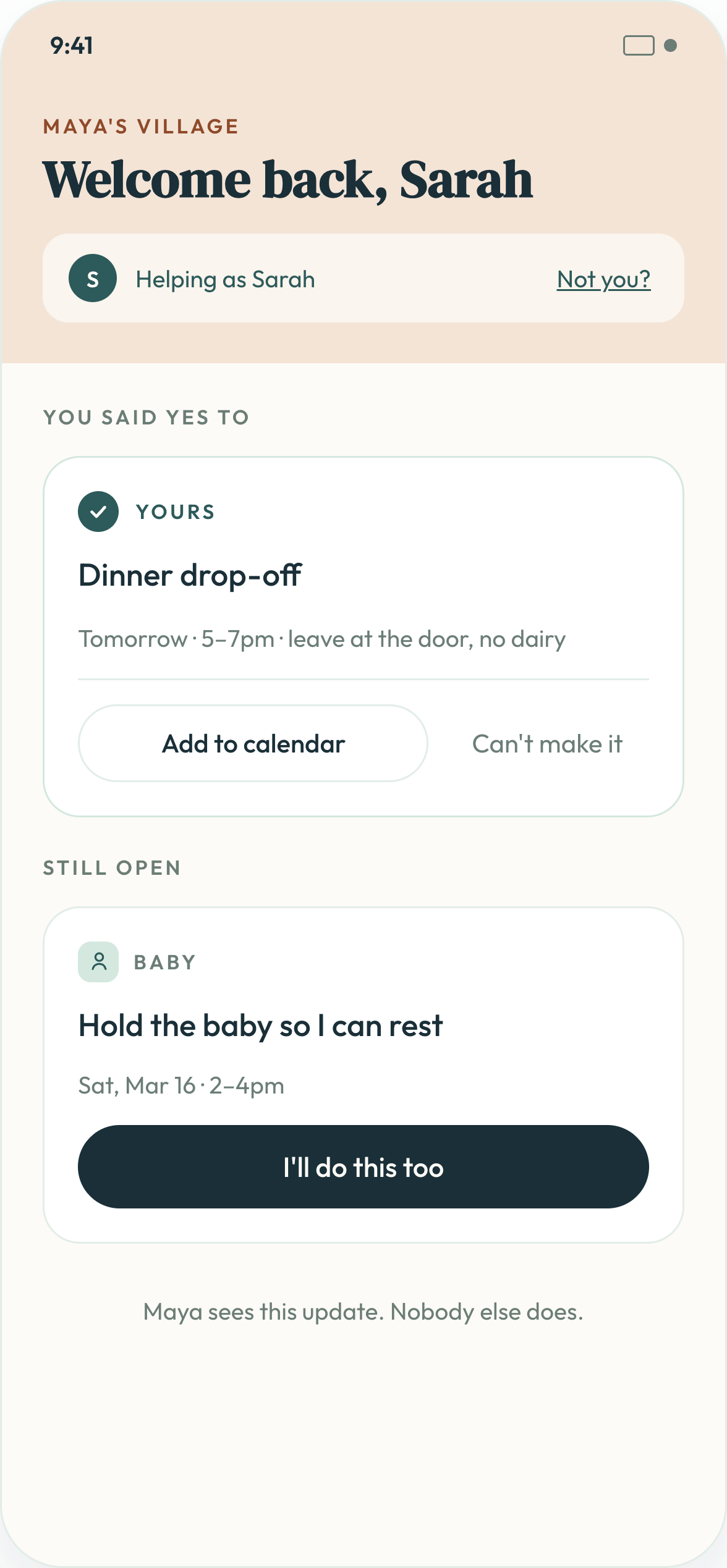
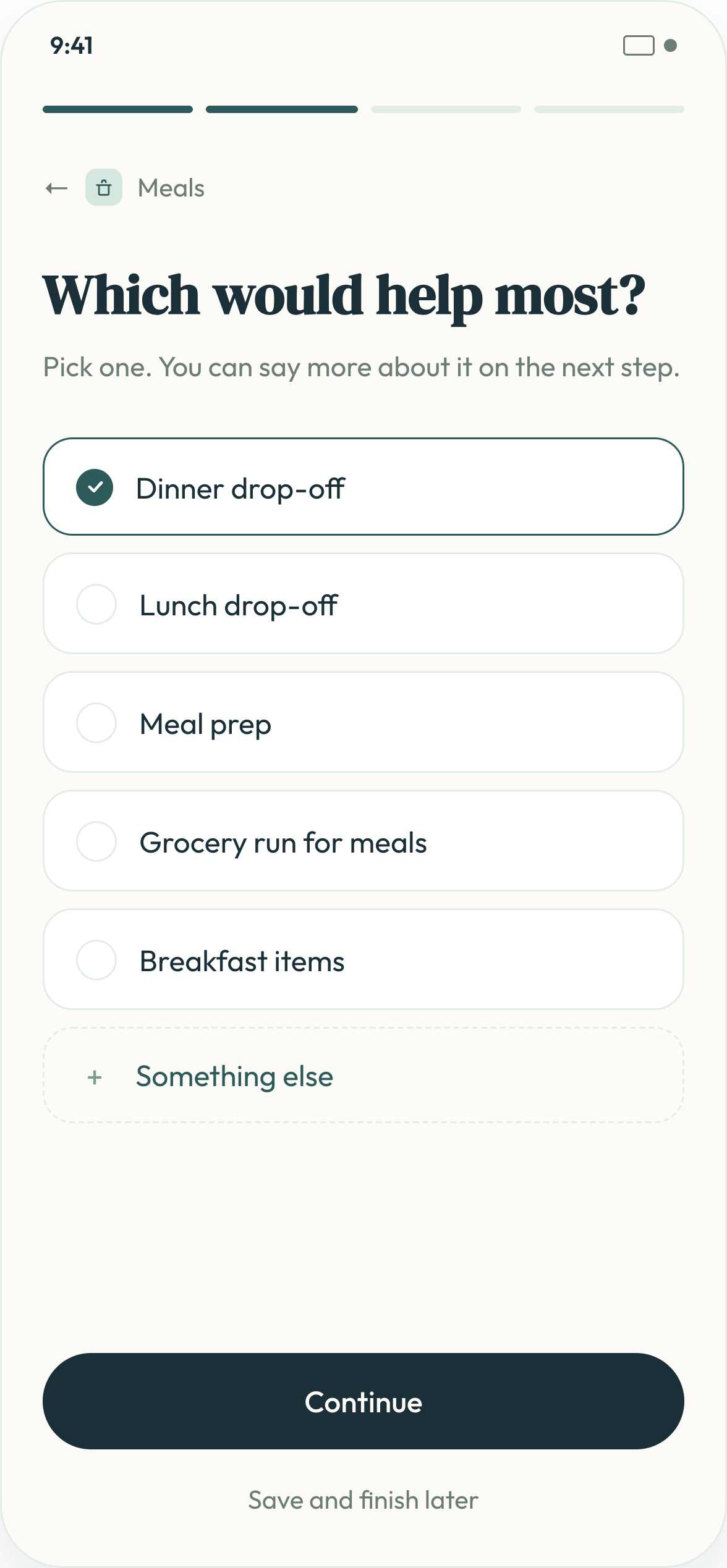
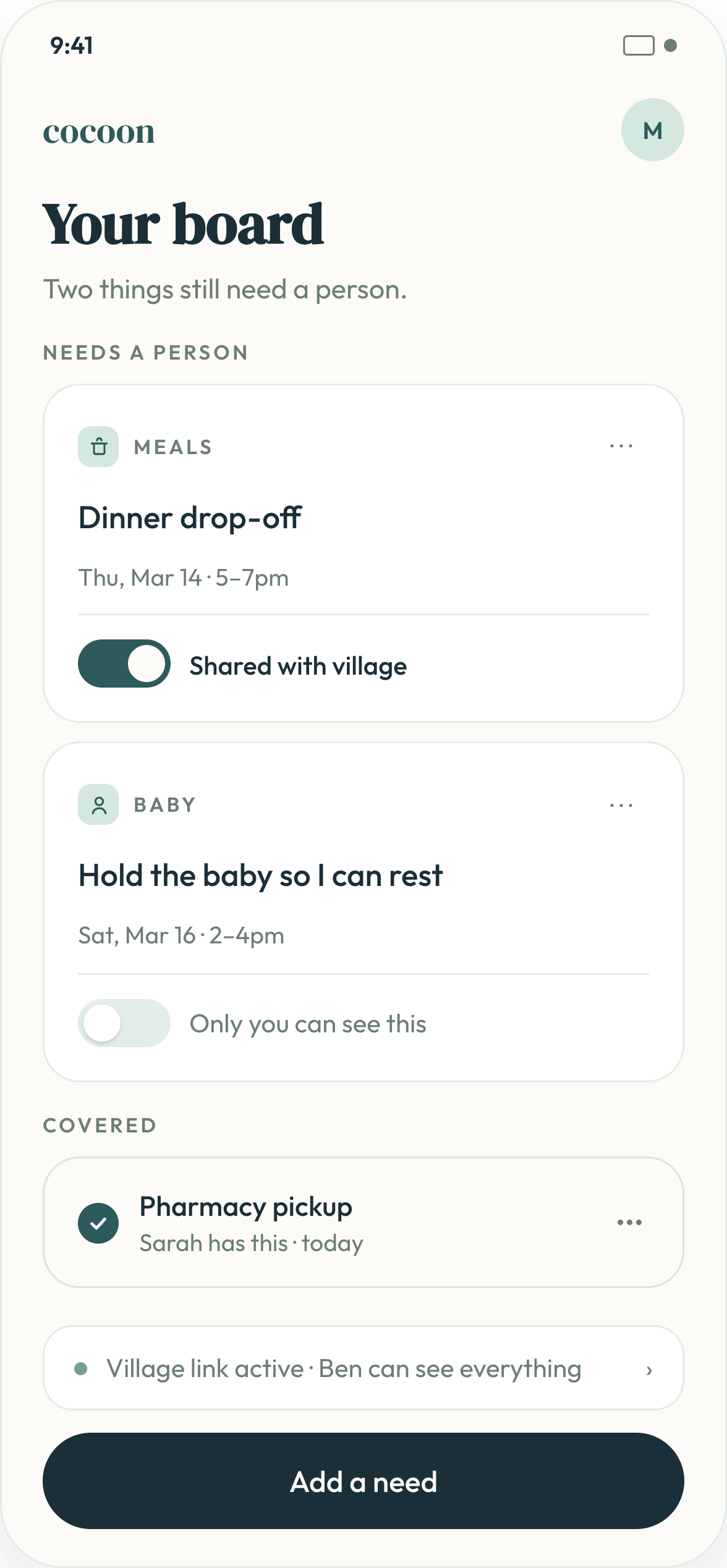
Rather than trying to solve every challenge of postpartum life at once, I focused on one of the most immediate sources of friction: managing appointments and the information surrounding them.
The experience was designed to bring together information from existing tools, anticipate what needed attention, and help families stay organized with minimal effort.
Every design decision came back to the same principle: technology should take on more of the work, not ask more of the person using it.
currently in beta testing